

Every time you press the brake pedal, something invisible makes it work. That something is brake fluid, a hydraulic fluid that quietly handles one of the most critical jobs in your car. Most drivers never think about it until something goes wrong, but understanding what it does and how to maintain it is a simple way to stay safer on the road.
What Is Brake Fluid?
What is brake fluid? It is a hydraulic fluid used in a car's braking system to transmit the force from the brake pedal to the brake components at each wheel. When you press the pedal, that force compresses the fluid inside the brake lines.
Because liquid is incompressible, the force transfers almost instantly through the system to the callipers or wheel cylinders, which clamp the brake pads against the disc or drum to slow the car. Without it, the force from your foot has no way to reach the brakes at each wheel.
What Does Brake Fluid Do?
What does brake fluid do beyond simply transmitting pressure? A good brake fluid must meet several demanding requirements:
Resist extreme heat: Braking generates enormous friction. The fluid in the callipers is exposed to this heat and must not boil. If it does, vapour bubbles form in the lines and, unlike liquid, vapour is compressible. The brake pedal then feels spongy or sinks toward the floor, a dangerous condition known as vapour lock.
Protect metal and rubber components: Brake fluid flows through brake lines, master cylinders, callipers, and seals. It must not corrode metal parts or degrade the rubber seals it contacts.
Maintain consistent viscosity: The fluid must flow reliably in cold conditions and after hard braking. Too thick or too thin and braking response becomes unpredictable.
Lubricate moving parts: The fluid provides light lubrication to small components inside the braking system, reducing internal wear.
DOT Ratings: What They Mean
Car brake fluid is classified by DOT (Department of Transportation) ratings based primarily on boiling point. DOT 3 has a dry boiling point of 205°C, DOT 4 reaches 230°C, and DOT 5.1 reaches 270°C. The more important figure is the wet boiling point, which reflects performance after the fluid has absorbed moisture in real-world use. DOT 3 drops to 140°C wet, while DOT 4 holds at 155°C, which is why DOT 4 is increasingly common in modern vehicles with demanding brake systems.
Most passenger cars use DOT 3 or DOT 4. Always use the grade specified by your vehicle manufacturer and never mix DOT grades unless confirmed as compatible.
Does Brake Fluid Go Bad?
Does brake fluid go bad? Yes, and often in a way that is not visible from looking at it. Brake fluid is hygroscopic, meaning it naturally absorbs moisture from the surrounding environment.
Even in a sealed system, humidity works its way in over time through microscopic gaps in hoses, seals, and the reservoir cap. As water content builds up, the boiling point drops. A fluid that started with a dry boiling point of 230°C can fall well below that threshold after two to three years of normal use, significantly raising the risk of vapour lock under hard braking.
Water in the system also promotes corrosion in brake lines, callipers, and the master cylinder, leading to internal rust and potential leaks. Fresh brake fluid is typically clear to pale yellow. As it absorbs moisture and is exposed to heat cycles, it darkens to amber or brown. Colour alone is not a reliable indicator though.
Fluid can be significantly contaminated with moisture before any visible discolouration appears, which is why time-based replacement schedules matter more than visual assessment. Most manufacturers recommend replacing brake fluid every two years.
Signs Your Brake Fluid Needs Attention
Watch for these warning signs that car brake fluid may have deteriorated:
A soft or spongy brake pedal: A pedal that feels mushy or sinks further than usual can indicate moisture or air in the fluid.
Longer stopping distances: Contaminated fluid reduces hydraulic pressure, resulting in noticeably longer stops.
Dark or cloudy fluid: Visibly brown or murky fluid in the reservoir is a sign the fluid has aged.
The brake warning light: This can illuminate when fluid levels drop or when the system detects a pressure issue, both requiring prompt attention.
How to Check Car Brake Fluid
Checking car brake fluid is a quick task any driver can do at home without tools.
Step 1: Locate the reservoir
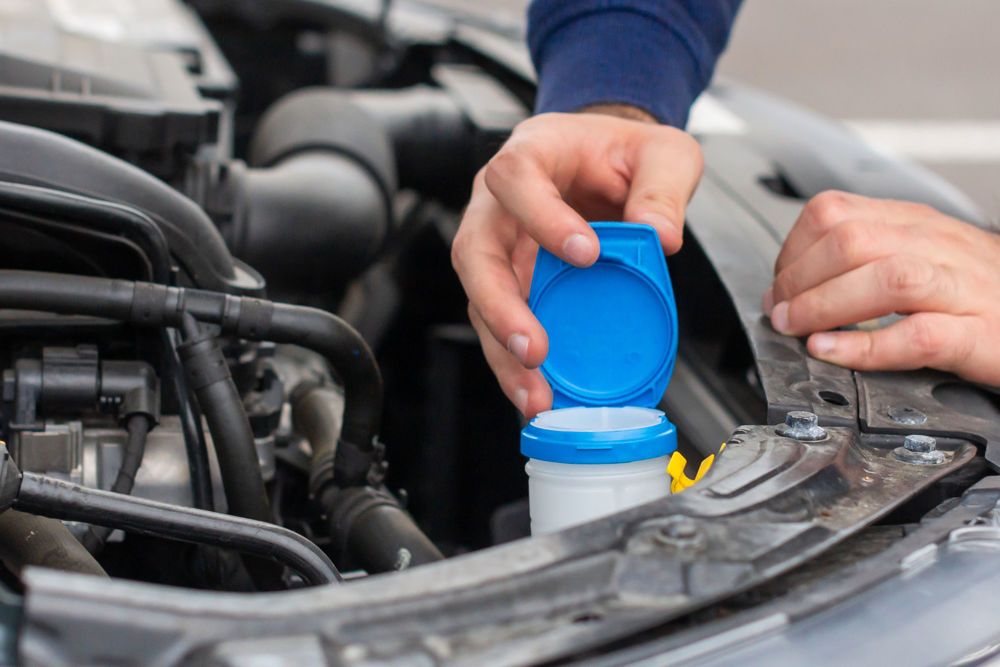
Open the bonnet and find the master cylinder near the firewall on the driver's side. The brake fluid reservoir is the small translucent container on top, usually marked with a brake symbol or the words "Brake Fluid."
Step 2: Check the level without opening
Read the fluid level against the MIN and MAX markings on the outside of the reservoir without removing the cap. The level should sit between these two lines.
Step 3: Check the colour
Clear to pale yellow is normal. Dark brown or murky fluid warrants a professional moisture content test.
Step 4: Top up only if needed
If the level is near or below MIN, carefully add the correct DOT grade. Never overfill past MAX. A significantly low level often points to brake pad wear or a leak and should be investigated professionally, not simply topped up.
Important:
Avoid opening the reservoir unless necessary. Each time the cap is removed, moisture from the air can enter the system.
How Often Should Brake Fluid Be Changed?
Most vehicle manufacturers recommend a brake fluid change every two years, regardless of mileage. Some extend this to three years for certain formulations.
Frequent heavy braking, hilly terrain, stop-start traffic, and humid climates all accelerate fluid breakdown. If any of these apply, the two-year schedule is the right one. A workshop can also test moisture content and confirm whether a change is due.
Also Read: Safety Tips for Driving in Different Weather Conditions
Conclusion
Brake fluid is one of the most overlooked fluids in a car, yet it sits at the centre of the system that stops the vehicle. Checking it regularly and replacing it on schedule are simple habits that protect one of the most safety-critical systems on any car.
Fluid that has absorbed too much moisture, darkened significantly, or has not been changed in over two years should be replaced. It is an inexpensive service that makes a genuine difference to braking performance.
FAQs About Brake Fluid
Q1. What is brake fluid and why is it important?
Ans. Brake fluid is a hydraulic fluid that transmits braking force from the pedal through brake lines to the callipers at each wheel. Without it, the braking system cannot function. It must resist high heat, protect internal components, and flow consistently across a wide temperature range.
Q2. What does brake fluid do in a car?
Ans. It transfers braking force from the pedal to the brake components at each wheel, lubricates internal moving parts, and must resist boiling under the extreme heat generated during braking.
Q3. Does brake fluid go bad?
Ans. Yes. Brake fluid absorbs moisture over time, lowering its boiling point and reducing braking effectiveness. It can also promote corrosion in brake lines and calipers. Most manufacturers recommend replacing it every two years regardless of appearance.
Q4. How do you check car brake fluid?
Ans. Open the bonnet and locate the translucent reservoir on top of the master cylinder near the firewall. Check the fluid level against the MIN and MAX markings without removing the cap. Clear to pale yellow is normal. Dark brown or murky fluid warrants a professional test.
Q5. What colour should brake fluid be?
Ans. Fresh fluid is clear to pale yellow. With age and moisture absorption it darkens to amber or brown. Fluid can degrade significantly before visible discolouration appears, so time-based replacement is more reliable than judging by colour.
Q6. Can I top up brake fluid myself?
Ans. Yes, using the correct DOT grade for your vehicle. However, a noticeably low level often indicates brake pad wear or a leak rather than evaporation. Have the system inspected professionally if the level has dropped significantly.