

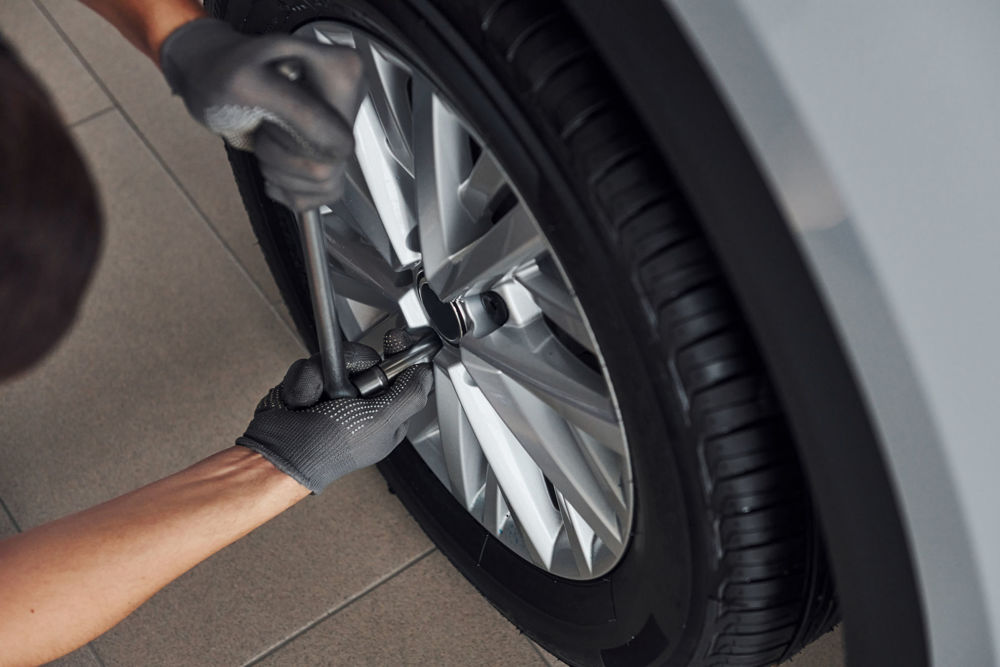
Getting new tyres for your car is one of those tasks most drivers know they need to do but rarely think about in detail. You drop the car off, wait a while, and drive away on fresh rubber. But what actually happens in between? Understanding the tyre fitting process helps you know what to expect, ask the right questions, and make sure the job has been done correctly before you leave the workshop.
This guide walks through everything from when tyre replacement becomes necessary, to exactly how a tyre is fitted, and how long it takes.
When Does Tyre Replacement Become Necessary?
Before understanding how to fit a tyre, it helps to know when one needs replacing. Tyres do not last forever, and several situations call for a tyre replacement:
Worn tread depth: The legal minimum tread depth in India is 1.6mm across the central three-quarters of the tyre. Most tyre specialists recommend replacing tyres at 3mm for adequate wet-road safety. Most tyres have built-in wear indicators in the grooves that become flush with the tread surface when the legal limit is reached.
Age of the tyre: Rubber degrades over time even if tread looks adequate. Tyres should be inspected every five to six years and replaced after ten years regardless of apparent condition.
Visible damage: Sidewall bulges, deep cuts, cracks, or embedded objects that have compromised the tyre structure all require immediate replacement. Driving on a damaged tyre is a safety risk that no amount of inflation can fix.
Puncture beyond repair: Not all punctures can be repaired. Large holes, damage near the sidewall, or punctures in run-flat tyres often mean the tyre must be replaced entirely.
Should You Fit Tyres Yourself or Use a Professional?
While it is technically possible to attempt tyre installation at home, it is strongly recommended to have the work done by a professional at a tyre workshop. Here is why:
The right tools matter: Professional workshops use tyre spreader machines, hydraulic lifts, and torque wrenches. Without them, there is a real risk of damaging the rim or fitting the tyre incorrectly.
Wheel balancing requires specialised equipment: After fitting, the tyre must be balanced on a machine. An unbalanced tyre causes vibration at speed, uneven wear, and suspension stress. This step cannot be replicated at home.
Safety is non-negotiable: An incorrectly fitted tyre can separate from the rim at speed. Professional fitting ensures the tyre is seated, inflated, and secured correctly.
The Tyre Fitting Process: Step by Step
Here is what happens during a professional tyre fitting process at a workshop:
Step 1: Lifting the Vehicle
The car is raised on a hydraulic lift so all four wheels are clear of the ground. This gives the technician safe, stable access to each wheel without placing the car on a jack.
Step 2: Removing the Wheel Nuts
The wheel nuts or lug nuts are unscrewed using a professional impact wrench. These are the fasteners that hold the wheel to the hub. The technician works carefully to avoid stripping threads or damaging the studs.
Step 3: Releasing the Old Tyre
Once the wheel is removed from the car, the valve insert is unscrewed and the remaining air pressure is fully released from the old tyre. The tyre is then separated from the rim using a tyre spreader machine, which levers the tyre bead away from the rim without damaging either component.
Step 4: Inspecting the Rim
With the old tyre off, the technician inspects the wheel rim for rust, corrosion, cracks, or signs of damage. A compromised rim can prevent the new tyre from seating properly and holding air. Any issues are addressed before the new tyre goes on.
Step 5: Fitting the New Tyre
The new tyre is selected to match the size specified for the vehicle. Before mounting, the technician checks that the tread pattern is facing in the correct direction, which matters particularly for directional tyres where rotation direction affects performance and drainage. The tyre spreader is used to seat the tyre onto the rim carefully, after which the tyre is inflated to the manufacturer's recommended pressure.
Step 6: Balancing the Wheel
The wheel is placed on a balancing machine, which spins it to detect imbalances and pinpoint where counterweights need to be attached to the rim. Proper balancing ensures smooth running, even tyre wear, and stable handling at speed.
Step 7: Refitting and Final Checks
The balanced wheel is remounted on the car. Wheel nuts are tightened by hand first, then the car is lowered and the nuts are fully tightened to the correct specification using a torque wrench. The technician also checks the removed tyres for uneven wear patterns, which can indicate wheel alignment or suspension issues.
How Long Does Tyre Fitting Take?
How long does tyre fitting take depends on how many tyres are being replaced and whether additional services are required.
A single tyre replacement typically takes 20 to 30 minutes at a well-equipped workshop. Replacing all four tyres, including balancing, generally takes 45 minutes to an hour. Wheel alignment checks can add another 30 to 45 minutes.
Corroded wheel nuts, rim damage, or a busy workshop can add time. Booking ahead minimises waiting.
What to Check After Tyre Fitting
Once your car is back on the road, a few checks are worth doing in the first few days after tyre installation:
Check tyre pressure: Confirm the pressure matches the vehicle manufacturer's recommendation, found on a sticker inside the driver's door jamb or in the owner's manual.
Notice the feel of the car: New tyres should feel stable, smooth, and quiet. Vibration, pulling to one side, or unusual noise after fitting should be reported to the workshop promptly for a recheck.
Check pressure again after the first 50 km: Pressure can settle slightly after initial driving on new tyres.
Also Read: What Is Wheel Alignment? Importance, Benefits & When to Get It Checked
Conclusion
The tyre fitting process is more involved than it might appear from the waiting room. From lifting the car and removing the old tyres, to inspecting the rims, fitting the new rubber, balancing each wheel, and torquing the nuts correctly, every step matters for your safety and the long-term performance of the tyre.
Tyre replacement is not something to rush or cut corners on. Having the work done by trained professionals with the right equipment gives you the confidence that your new tyres will perform exactly as they should from the first kilometre onward.
FAQs About Tyres Fitted
Q1. How long does tyre fitting take?
Ans. A single tyre replacement at a professional workshop typically takes 20 to 30 minutes. Replacing all four tyres, including balancing, generally takes 45 minutes to an hour. Wheel alignment checks can add another 30 to 45 minutes.
Q2. Can I fit a tyre myself at home?
Ans. While technically possible for an emergency spare swap, professional fitting is strongly recommended for new tyre installation. Proper tools, balancing equipment, and torque wrenches are essential for a safe, correct fit that home fitting cannot replicate.
Q3. What is wheel balancing and why is it done during tyre fitting?
Ans. Wheel balancing involves spinning the wheel on a machine to detect weight imbalances and attaching small counterweights to the rim to correct them. An unbalanced wheel causes vibration at speed, uneven tyre wear, and suspension stress. It is a standard part of the tyre fitting process.
Q4. When should tyres be replaced?
Ans. Tyres should be replaced when the tread depth reaches the legal minimum of 1.6mm, though many specialists recommend replacement at 3mm. Tyres should also be replaced if they show visible damage, sidewall bulging, or are more than ten years old regardless of tread condition.
Q5. What should I check after getting new tyres fitted?
Ans. Check the tyre pressure against the vehicle manufacturer's specification, and pay attention to how the car drives in the first few days. Vibration, pulling, or unusual noise after fitting should be reported to the workshop promptly for a recheck.