

You have been to a service centre and heard a person say, 'Sir, you need balancing' but you have not given much thought to what that person actually meant. Was it tyres balancing or wheel balancing? Or is both the same thing?
It is at this point that it becomes a bit confusing. These words are used interchangeably by most people, and to be honest, even by some mechanics on a casual basis.
However, when it comes to learning more about your car, it is better to know what is really going on in the insider world. Then, to simplify and get down to the point, what is tyre balancing, what is wheel balancing, and is there actually a difference?
What Is Tyre Balancing?
We will begin with the simple ones, i.e., what is tyre balancing? Balancing a tyre is the process of properly distributing the weight of the tyre and the wheel assembly to enable it to roll easily at high speed.
Now here's the thing. No tyre is perfectly uniform. Even new tyres may have a minor variation in weight. These minor imbalances may cause vibrations when the tyre is rotating. That is where the balancing of tyres comes in.
In the process, small weights are placed at certain points within the wheel to counter the wheel's uneven points. When this is done properly, the tyre will operate at the same speed, never wobbling or vibrating.
What Is Wheel Balancing?
Now, let’s talk about what wheel balancing is. Technically speaking, wheel balancing refers to the same process as tyre balancing, but with a slightly broader perspective. Instead of focusing only on the tyre, it considers the entire wheel assembly, which includes:
The tyre
The rim
The valve
Even minor imperfections in mounting
So, when someone says wheel balancing, they’re usually referring to balancing the complete rotating unit. In practical terms, both tyre balancing and wheel balancing involve the same process, placing weights to ensure smooth rotation.
So, Are Tyre Balancing and Wheel Balancing the Same?
Short answer? Yes... and no. Here’s the thing.
In everyday usage, tyre balancing and wheel balancing are often used interchangeably. Most service centres don’t make a strict distinction. But technically, wheel balancing is the more accurate term because the balancing applies to the entire assembly, not just the tyre.
Still, for practical purposes, when someone tells you to get tyre balancing done, they’re referring to the same procedure.
Why Balancing Matters More Than You Think
Many drivers ignore balancing until they feel something is wrong. But improper tyre balancing can affect more than just comfort. Here’s what happens when the wheels aren’t balanced properly:
Steering Vibrations: You might feel vibrations in the steering wheel, especially at speeds above 60–80 km/h.
Uneven Tyre Wear: Imbalance causes certain parts of the tyre to wear faster than others.
Reduced Driving Comfort: The car may feel slightly unstable or shaky.
Suspension Stress: Over time, an imbalance can put extra strain on suspension components.
So, while it might seem like a minor maintenance task, wheel balancing actually plays a big role in the overall driving experience.
Signs That Your Car Needs Balancing
Sometimes the car itself tells you something isn’t right. Here are a few common signs that indicate you might need tyre balancing:
Vibrations in the steering wheel
Uneven or patchy tyre wear
Slight wobbling at higher speeds
Noise coming from the tyres
If you notice any of these, it’s probably time to have the wheels balanced.
How Tyre Balancing Is Done
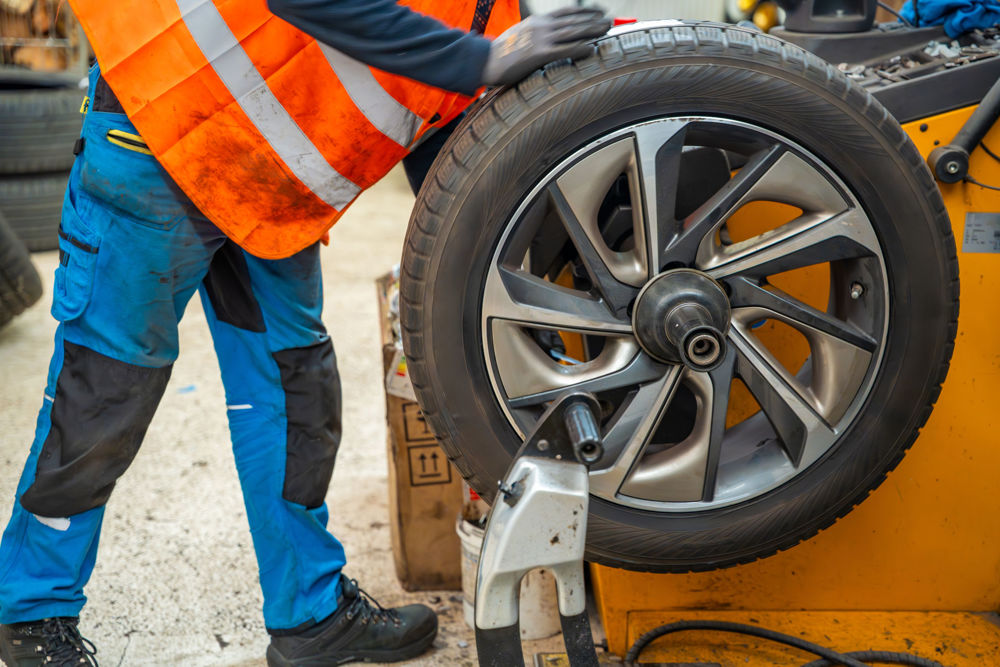
The process itself is quite straightforward. The wheel is placed on a balancing machine that spins it at high speed. The machine detects uneven weight distribution and identifies the exact points that require correction.
Small metal weights are then attached to the rim to balance it out. Once done, the wheel rotates smoothly without any noticeable vibration. That’s essentially how tyre balancing works.
When Should You Get Tyre Balancing Done?
This is something many drivers aren’t sure about. There’s no strict rule, but generally, tyre balancing should be done:
Every 5,000-10,000 km
When you install new tyres
After hitting a pothole or curb
If you feel vibrations while driving
Regular checks help prevent bigger issues later.
Tyre Balancing vs Wheel Alignment
Now, this is where another confusion arises: tyre balancing vs wheel alignment. These two are often mixed up, but they’re completely different.
Tyre Balancing
Focuses on weight distribution
Eliminates vibrations
Ensures smooth rotation
Wheel Alignment
Adjusts the angles of the wheels
Ensures the tyres are parallel and properly positioned
Improves steering and tyre wear
So, when comparing tyre balancing vs wheel alignment, think of it this way:
Balancing is about how the wheel spins.
Alignment is the position of the wheel.
Both are important, but they solve different problems.
What Happens If You Ignore Balancing?
Skipping wheel balancing might not seem like a big deal initially, but over time, it can lead to:
Faster tyre wear
Reduced fuel efficiency
Poor handling
Increased repair costs
And in some cases, it can even affect safety, especially at higher speeds. So, it’s one of those small things that can prevent bigger headaches later.
Does Balancing Affect Fuel Efficiency?
Surprisingly, yes.
Poor tyres balancing causes the tyres to develop additional resistance during rolling. This compels the engine to exert a bit more effort, and this can affect fuel efficiency in the long run. Although it is not a large amount of difference, it will accumulate, particularly when you are on the road every day. Tyre balancing is done properly, which makes the car move more easily, which may contribute to better efficiency.
Is Tyre Balancing Needed for New Tyres?
One of the most frequent questions is whether the new tyres should be balanced. The answer is yes. Even new tyres are not balanced. That is the reason why balancing of the wheel is always carried out during the installation of tyres. Failure to undertake this step may result in vibrations immediately.
Real-Life Driving Impact
Let us get this a little closer to home. Suppose you are a driver on a highway. When moving slowly, nothing is amiss. However, at speeds over 80 km/h, there is little vibration in the steering.
At first, it's easy to ignore. But over time, it gets worse. That is normally an indication that the tyres balancing is out of place. You can immediately feel the difference. Once it is fixed, the drive becomes more stable, quieter, and smoother.
Why Many People Ignore It
Despite its importance, many drivers delay wheel balancing. Why?
It doesn’t feel urgent
The car still runs “fine”
It’s seen as optional maintenance
But the reality is that regular balancing helps extend tyre life and improve driving comfort. It’s one of those things that doesn’t demand attention, but definitely deserves it.
Also Read: Tyre rotation: types and when to do it?
Final Thoughts
Then we can resume the discussion, are tyre balancing and wheel balancing identical? In everyday language, yes. The majority of the population takes them both interchangeably. Wheel balancing is technically the appropriate term, as the entire wheel assembly is taken into consideration.
In fact, however, the two mean the same thing. It is not the terminology, the maintenance itself that is important. The knowledge of what tyre balancing is, when to get it done, and the difference between tyre balancing and wheel alignment will make a considerable difference in the way your car drives. In some cases, it is minor changes, such as proper balancing, that can make your drive reach the point you like.
FAQs About Tyre Balancing And Wheel Balancing
1. What is tyre balancing and why is it important?
Tyre balancing ensures that the wheel and tyre load is well balanced. It helps reduce vibrations, improves tyre life, and enhances the driving experience.
2. What is wheel balancing in simple terms?
Wheel balancing entails balancing the wheel assembly so that it does not create vibrations as the tyres turn.
3. Is tyre balancing and wheel balancing the same?
In most cases, yes. Wheel balancing and tyre balancing are used interchangeably, though technically wheel balancing is the better term.
4. How often should tyre balancing be done?
Tyre balancing is suggested after every 5,000-10,000 km or at the time when you have felt the steering vibrating or when you have found that the tyre is unevenly worn.
5. What is the difference between tyre balancing and wheel alignment?
The major distinction between tyre balancing and wheel alignment is that balancing concerns the weight balance, whereas alignment concerns the wheel's position as it should be.